 StoreySG
HDB Renovation Permit Guide: What You Need Before Works Begin
Before any tool touches your HDB flat, you need the right approvals — and the right contractor. This guide explains who must apply for an HDB renovation permit, which works trigger that requirement, the permitted working hours, and the special rules that apply to newer flats.
The Golden Rule: Use an HDB-Licensed Contractor
The Housing & Development (Renovation Control) Rules require that you engage a contractor listed in HDB's Directory of Renovation Contractors (DRC) for all renovation works in your flat. This is not optional — unlicensed contractors cannot legally carry out HDB renovations, and the flat owner is responsible if works are done outside the rules.
You can search the DRC on the HDB website. When interviewing contractors, ask to see their DRC registration and check the expiry date. The contractor — not you — is responsible for applying for any required HDB renovation permit, but you are responsible for ensuring they actually do.
Before signing a contract, verify the contractor's DRC status directly on the HDB website. Don't rely solely on the contractor's word or a printout they provide.
Do You Need a Renovation Permit?
Not all renovation works in an HDB flat require a permit — some can proceed under general HDB guidelines without a formal application. The key principle: works that are structurally significant, affect shared systems (waterproofing, sanitation, gas), or generate substantial noise and dust typically require a permit, while purely cosmetic changes generally do not.
Your licensed contractor knows which category your planned works fall into. As a homeowner, treat the table below as a starting-point guide and always confirm the current requirements with HDB and your contractor before works begin, as rules can be updated.
| Work Type | Permit Typically Required? | Notes |
|---|---|---|
| Hacking / demolishing walls | Yes | Structural and RC walls cannot be hacked; floor plans usually required for application |
| Removing wall or floor finishes | Yes (restricted works) | Classified as "restricted" — tighter hour rules apply; special rules for new flats |
| Cutting tiles / heavy drilling | Yes (restricted works) | Weekdays only, confirm hours with HDB |
| Waterproofing works | Yes | Required before re-tiling wet areas |
| Plumbing / sanitary works | Yes | Must use licensed plumber; subject to HDB water/sanitary guidelines |
| Electrical works | Yes | Must use an EMA-licensed electrical worker |
| Painting walls / ceilings | Generally no | Must follow HDB guidelines on materials; no structural changes |
| Installing false ceiling | Depends on type/location | Check HDB guidelines; cannot obstruct sprinkler heads or smoke detectors |
| Installing air-conditioners | Yes | Must use a BCA-trained installer; comply with HDB condensate-discharge rules |
| Replacing doors / gates | Generally no | Must meet HDB specifications for main door, gate, and corridor clearance |
This table shows general principles as of 2026. Permit requirements are set by HDB and can change. Always verify the current requirements with HDB and your licensed DRC contractor before committing to any scope of works.
Permitted Working Hours
Renovation noise is tightly regulated in HDB estates to protect residents. HDB divides works into two tiers, each with its own time restrictions (as of 2026 — verify current rules with HDB):
| Work Tier | Permitted Days | Permitted Hours |
|---|---|---|
| General renovation works (painting, carpentry, light fitting, etc.) |
Monday to Saturday | 9:00 am – 6:00 pm |
| Restricted renovation works (hacking, removing wall/floor finishes, heavy drilling, cutting tiles) |
Monday to Friday (weekdays only) | 9:00 am – 5:00 pm |
No renovation works — general or restricted — are allowed on Sundays, Public Holidays, or the eves of major public holidays (New Year's Day, Chinese New Year, Deepavali, Hari Raya Puasa, and Christmas Day).
For DIY work that involves drilling or hammering, HDB advises avoiding these activities from 10:30 pm to 7:00 am, as the noise disturbs neighbours.
These hours are HDB's guidelines as of 2026. Confirm the current permitted hours with HDB or your licensed contractor — they are responsible for keeping to the rules and can be penalised if they do not.
Notifying Your Neighbours
HDB requires you to inform your immediate neighbours before renovation works begin. This is both a courtesy obligation and a formal requirement. The standard practice is to notify at least the units directly above, below, and on either side of your flat.
Your contractor should provide a written renovation notice that you slip under neighbouring doors. The notice typically states who you are, which flat is being renovated, the expected start and end dates, and the contractor's contact details. This gives neighbours a channel to raise concerns before work starts rather than escalating to HDB while works are underway.
Special Rules for New Flats (Under 3 Years Old)
If you have recently collected your keys from HDB — whether a BTO or a new resale flat — there is an important restriction to be aware of. Newly built HDB flats have a 3-year restriction period during which you cannot remove the original wall and floor finishes in bathrooms and toilets.
The reason is practical: HDB's waterproofing warranty covers these wet areas for a defined period, and hacking out the original tiles during that window can void or complicate warranty claims if water-seepage issues arise later. You may overlay new tiles on top of the original finishes in some situations, but the rules around this are specific. Confirm exactly what is and is not allowed with your licensed contractor and with HDB before proceeding.
Removing wet-area finishes in a flat under 3 years old without proper approval can void HDB's waterproofing warranty and expose you to significant repair costs if seepage occurs. Verify the current rules with HDB before any wet-area works.
The Renovation Permit Application Process
The renovation permit application is submitted electronically by your licensed contractor — not by you as the homeowner. That said, you should understand the process so you can verify it is happening correctly:
- Engage a DRC-listed contractor and agree on the scope of works.
- Contractor submits the permit application online to HDB, with supporting documents (including floor plans for structural works).
- HDB reviews and issues the permit. For straightforward works, this can be quick; for more complex applications (wall demolition, plumbing changes), allow more time.
- Works commence only after permit is issued. Starting works before permit approval is a violation.
- Contractor carries the permit on site during the renovation period and must produce it on request.
- Post-completion inspection may be required for certain work types.
As the flat owner, make sure you receive a copy of the approved permit before any noisy or structural works begin. If your contractor is vague about whether a permit was actually applied for and approved, that is a red flag — see our guide on hidden renovation pitfalls for more warning signs.
Works That Are Never Allowed
Regardless of permit status, some works are simply prohibited in HDB flats. Key examples include:
- Hacking or altering structural reinforced concrete (RC) walls, columns, and beams — these carry the building's load.
- Hacking, altering, or installing any openings in the household shelter (bomb shelter) walls or door — these are regulated structures with specific requirements.
- Cutting, hacking, or coring through the floor slab without BCA/HDB involvement and a Professional Engineer.
- Altering common property — corridors, stairwells, external facades, shared pipelines.
- Works that obstruct fire safety equipment such as sprinkler heads, smoke detectors, or emergency lighting.
If you are unsure whether a wall is structural, do not guess — get a copy of the structural drawings from HDB and consult a Professional Engineer. See our deeper dive in hacking and partition walls for the full picture.
Planning Your Renovation Layout Before Works Begin
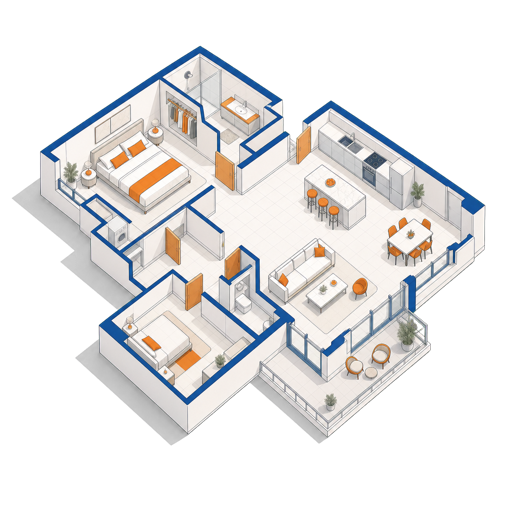
One of the most common and costly renovation mistakes is committing to a contractor scope before you have finalized your layout. Variation orders mid-project are expensive. Before you brief your contractor, spend time working out exactly which walls stay, where your furniture goes, and how the space will actually function for your household.
StoreySG lets you upload your actual HDB floor plan and rebuild it at true millimetre scale in the browser — no installation, no powerful PC needed. You can test layout options in 2D and 3D, move walls around to explore what is structurally plausible, and export a dimensioned DXF floor plan to share with your contractor. Arriving at site briefings with a to-scale plan rather than a sketch reduces misunderstandings and keeps your scope tight. Pair that with the permit checklist above and you are starting your renovation on solid ground.
For more on the Singapore renovation journey, see our guides on interior designer vs. contractor and condo MCST renovation approval.
Design it in StoreySG
Upload your floor plan and design right in the browser — no install, no gaming PC. Edit by natural language, keep 2D and 3D in sync at true millimetre scale, and export a CAD-ready DXF, render-ready 3D, or a furniture list.
Try the editor freeFrequently asked questions
Do I need an HDB renovation permit?
Some works require a formal HDB renovation permit (hacking, removing floor/wall finishes, plumbing, electrical), while purely cosmetic changes typically do not. Your HDB-licensed contractor is responsible for applying — confirm which of your planned works need a permit with them and with HDB before starting.
Who can apply for an HDB renovation permit?
Only contractors listed in HDB's Directory of Renovation Contractors (DRC) can carry out and apply for permits for HDB flat renovations. As the flat owner, you cannot apply directly — your licensed contractor submits the application on your behalf.
What are the permitted renovation hours in HDB flats?
As of 2026: general works (painting, carpentry, light fitting) are permitted Monday to Saturday, 9 am – 6 pm. Restricted works (hacking, removing finishes, heavy drilling) are limited to Monday to Friday, 9 am – 5 pm only. No works are permitted on Sundays, public holidays, or the eves of major public holidays. Verify current rules with HDB.
Can I renovate a brand-new HDB flat straight away?
For most works, yes — but there is a 3-year restriction period during which you cannot remove the original wall and floor finishes in bathrooms and toilets. This protects HDB's waterproofing warranty on those wet areas. Confirm what you can and cannot do with your licensed contractor and HDB before starting any wet-area works.
Can I hack any wall in my HDB flat?
No. Structural reinforced-concrete walls, columns, beams, and household-shelter (bomb shelter) walls cannot be hacked under any circumstances. Only non-structural walls may be removed with the appropriate permit. If you are unsure whether a wall is structural, get the building plans from HDB and consult a Professional Engineer.
Do I need to notify my neighbours before renovation?
Yes. HDB requires you to inform your immediate neighbours (above, below, and on both sides) before works begin. Your contractor will typically provide a written notice for you to slip under their doors, stating the renovation period and contact details.
This guide reflects HDB rules as understood in June 2026. Renovation regulations can change — always verify current requirements with HDB directly and with your HDB-licensed contractor before committing to any works.