 StoreySG
Condo Renovation & MCST Approval: What You Need Before Work Starts
Before any tradesperson touches your private condominium unit, you must notify — and usually get written approval from — your Management Corporation Strata Title (MCST) or managing agent. Starting without approval risks work being stopped, fines, and having to undo completed work. Book your renovation slot and submit paperwork early.
Why MCST Approval Matters for Condo Renovations
When you own a strata-titled condo unit in Singapore, the Management Corporation Strata Title (MCST) governs the common property — lifts, corridors, lobbies, façades, structural elements, and anything outside your unit's lot boundary. Its authority derives from the Building Maintenance and Strata Management Act (BMSMA), and its detailed house rules are recorded in the development's by-laws.
Even works entirely within your unit can affect common property (dust in corridors, hacking vibrations in shared slabs, debris in lift lobbies) and potentially breach strata by-laws. The MCST therefore requires advance notification and, for most significant works, a formal renovation application with written approval before your contractors set foot on site.
Starting renovation without MCST approval can result in works being halted by management, forfeiture of your renovation deposit, and in some cases an order to reinstate whatever was removed. Always get written approval first.
Step 1 — Contact the Managing Agent Early (Before You Sign Anything)
Before you finalise your floor plan, engage contractors, or order materials, call or email the managing agent (MA). Ask them to send you:
- The renovation application form and any required attachments
- The approved contractors list (some condos restrict which contractors may work in the building)
- The development's permitted renovation hours
- The renovation deposit amount and how to pay it
- Insurance requirements (public liability, typically)
- Lift and corridor protection requirements (moving blankets, hoarding, floor protection)
- Specific by-law restrictions — for example, on hacking, wet works, or changes to the façade or windows
This information shapes your budget and timeline. Discovering that your preferred tiling contractor isn't on the approved list after you've paid a deposit is an expensive surprise. Early contact — ideally four to six weeks before your intended start date — gives you enough time to respond to any requests for additional documents.
Ask the managing agent whether a pre-renovation inspection is required. Some developments insist on a joint walk-through to record the existing condition of the unit, corridor, and lift before work begins. This protects both you and the building.
Step 2 — Submit the Renovation Application
The renovation application is your formal written request to the MCST to carry out works. Typical contents of the application package include:
- Scope of works description — what you plan to do room by room (hacking, carpentry, new flooring, plumbing, electrical, painting, etc.)
- Proposed start and end dates — the MCST may need to schedule the lift-protection team or the loading bay
- Contractor details — name, company registration, and in some cases their insurance certificate
- Floor plan or drawings — for works involving layout changes or wet areas, some MCSTs ask for a simple plan showing what changes
- Renovation deposit — paid up front; refunded after inspection confirms no damage to common property
Processing time varies by development — some MCSTs turn approvals around in a few days; others hold a council meeting monthly and you must wait for the next session. Ask at the start so you can plan your contractor's schedule accordingly.
Permitted Renovation Hours — Confirm Before You Sign the Contractor
Every condo development sets its own permitted working hours, and these vary considerably. Quiet hours, Sundays, and public holidays are typically off-limits for noisy work such as hacking, drilling, and grinding. However the exact hours are set by each MCST — do not assume they match another development or the general Building Control guidelines.
| Aspect | Typical pattern (varies by condo) | What to verify with your MCST |
|---|---|---|
| Weekday noisy works | Often 9 am – 5 pm or similar | Exact start/end time; any lunch-break restriction |
| Saturday works | Often limited hours or noise restricted | Whether noisy works (hacking, drilling) are permitted at all |
| Sunday & public holidays | Generally prohibited for noisy works | Whether quiet works (painting, joinery) are allowed |
| Wet works duration limit | Some condos cap total weeks of wet works | Any maximum duration and whether extensions are possible |
| Renovation period limit | Often 3–6 months maximum | Exact limit and what happens if works overrun |
Share the confirmed hours with your interior designer or contractor in writing when you agree the timeline. A contractor who quotes a timeline assuming six-day working weeks may be setting you up for delays if the MCST only permits five.
The Renovation Deposit
Most condos require a renovation deposit paid by the unit owner before works begin. This deposit is held by the MCST and is refunded — fully or partially — after a post-renovation inspection confirms that common property (lifts, lobby floors, corridor walls, void-deck areas) has not been damaged by your contractors.
The deposit amount, conditions for deduction, and timeline for refund all vary by development. Check your MCST's by-laws or ask the managing agent. Common reasons for deductions include lift-door scratches, corridor-floor stains, and debris left in common areas.
The renovation deposit is not an endorsement of your works — it is a security bond for common-property damage. Pay it and keep your contractor accountable for corridor and lift protection throughout the job.
Contractor and Insurance Requirements
Many MCST by-laws restrict renovation to contractors who meet certain requirements. Before you commit to any firm, ask the managing agent:
- Is there an approved contractor list? Some MCSTs maintain one; others just ask for valid company registration and insurance.
- What insurance is required? Public liability insurance covering at least S$1 million is commonly required (the exact figure varies — verify with your MCST).
- Does the contractor need to register with the MCST before starting? Some developments require contractors to sign in and collect a temporary access pass each day.
If your preferred contractor cannot meet the insurance or registration requirement, you will need to find an alternative or ask the MCST whether an exception applies. Discovering this after work has started is disruptive.
Works That Typically Need Extra Approval or Are Prohibited
Even within your own unit, certain works affect shared structure or common property and require additional MCST — and sometimes Building and Construction Authority (BCA) — approval:
| Type of work | Typical requirement |
|---|---|
| Hacking reinforced concrete (RC) walls or columns | Generally not permitted; involves structural elements |
| Removing or altering load-bearing structures | Requires PE (Professional Engineer) endorsement; MCST & BCA involvement likely |
| Altering windows, grilles, or façade | Often restricted or prohibited by by-laws; façade is usually common property |
| Wet works (tiling, hacking, waterproofing) | Must be declared; may require waterproofing warranty documentation |
| Electrical and plumbing changes | Must comply with BCA/SP requirements; licensed contractors required |
| Adding a partition or new room | Declare to MCST; non-structural partitions generally allowed within unit lot |
For guidance on which walls can and cannot be hacked in a strata unit, see our guide on hacking and partition walls.
Protecting Common Property During Works
Your MCST will specify how contractors must protect common areas. Even if the rules are not spelled out, it is good practice — and often contractually your responsibility — to ensure:
- Lift protection: padded blankets on all lift walls and floor panels; remove before end of each day
- Corridor protection: cardboard or protective film on corridor floors from your unit door to the lift landing
- Waste management: debris bagged and removed by the contractor; no leaving waste bags in common corridors overnight
- Dust control: temporary hoarding or sheeting at your unit entrance to contain dust
- Loading bay coordination: pre-book the loading bay/service lift for delivery and waste removal dates
Failure to protect common areas is the most common reason renovation deposits are partially forfeited. Make this a line item in your contractor's scope of works.
Before works begin, take a time-stamped video walk-through of your corridor, lift interior, and lobby — covering any pre-existing marks. Share it with the managing agent. If any dispute arises at the post-renovation inspection, you have independent evidence of what was already there.
MCST Approval Checklist Before You Start
- Obtained and read the MCST's renovation rules / by-laws
- Submitted renovation application form with scope of works
- Received written approval from MCST / managing agent
- Paid the renovation deposit and kept the receipt
- Confirmed permitted working hours in writing
- Confirmed contractor meets insurance and registration requirements
- Booked the loading bay / service lift for key delivery dates
- Pre-renovation inspection completed (if required by MCST)
- Time-stamped video/photos of corridor and lift taken
- Contractor briefed on MCST rules, access times, and common-area protection
Plan Your Space Before Submitting
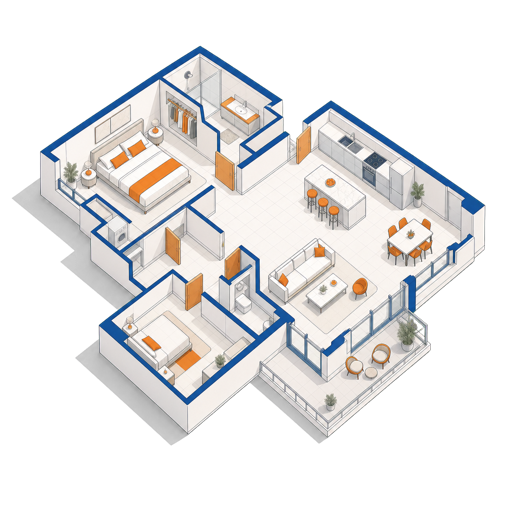
A well-drawn floor plan makes your renovation application clearer and reduces back-and-forth with the managing agent. If you're planning layout changes — moving a wet area, opening a wall, or adding a partition — having an accurate scaled plan helps the MCST assess whether your works affect common property or structure.
StoreySG lets you trace your actual condo floor plan at millimetre scale directly in the browser, then edit it by describing changes in natural language ("add a partition between the study and living room"). You can export a CAD-ready DXF or a PNG to include with your application — no specialist software or powerful machine required.
For comparison with HDB renovation requirements — which follow a different permit pathway — see the HDB renovation permit guide. For tips on vetting contractors and avoiding mid-project surprises, read our guide on hidden renovation pitfalls. And if structural walls are involved, review hacking and partition walls in Singapore before proceeding.
Design it in StoreySG
Upload your floor plan and design right in the browser — no install, no gaming PC. Edit by natural language, keep 2D and 3D in sync at true millimetre scale, and export a CAD-ready DXF, render-ready 3D, or a furniture list.
Try the editor freeFrequently asked questions
Do I need MCST approval for condo renovation in Singapore?
Yes. Most MCST by-laws require you to submit a renovation application and receive written approval before any works begin — even for works entirely within your unit. Contact your managing agent early to get the application form and rules.
How much is the renovation deposit for a condo in Singapore?
The deposit amount varies by development and is set by each MCST. There is no fixed standard across condos. Check your MCST's by-laws or ask the managing agent for the exact figure and refund conditions.
What are the renovation hours allowed in a Singapore condo?
Permitted hours are set by each individual MCST and vary across developments. Noisy works (hacking, drilling) are generally restricted on Sundays and public holidays, but exact weekday and Saturday hours differ. Always confirm in writing with your managing agent before signing a contractor.
Can I choose any contractor for my condo renovation?
Not always. Some MCST by-laws require contractors to be on an approved list, or at minimum to hold valid public liability insurance and a company registration. Verify with your managing agent before committing to a contractor.
What happens if I renovate a condo without MCST approval?
Management can order works stopped immediately. Your renovation deposit may be forfeited in part or in full. In some cases, you may be required to reinstate — at your own cost — anything that was altered without approval.
Can I hack walls in my condo unit without approval?
Non-structural, lightweight partitions within your unit lot can generally be removed, but you must still declare this in your renovation application. Reinforced concrete walls, structural columns, and anything touching common property must not be hacked without MCST approval and — for structural elements — a Professional Engineer's endorsement. When in doubt, verify with your MCST and a PE before proceeding.
This guide covers general principles. Specific rules — deposit amounts, permitted hours, approved contractors — are set by each individual MCST. Always verify with your managing agent and check your development's by-laws before starting any renovation works.